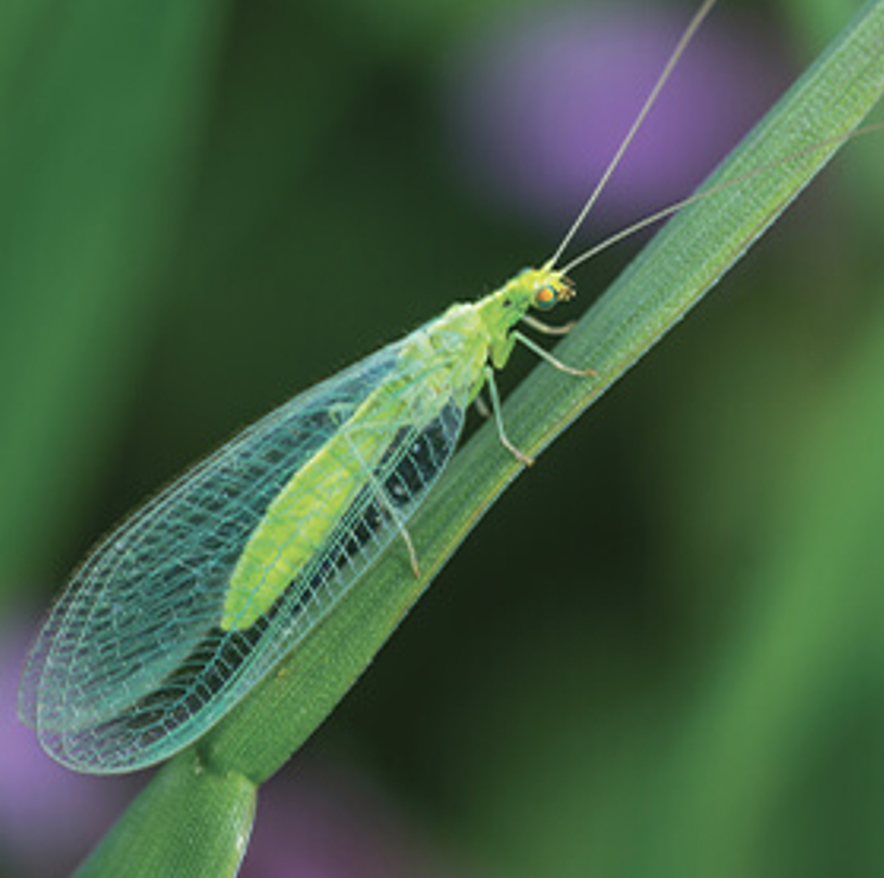
During our rose growing season, I have featured monthly articles on garden bugs – mostly the kind of bugs we want to remove from our gardens. As the season ends, I thought I would switch to writing about the beneficial insects that I have added to my garden this season to control aphids, spider mites and thrips. One such insect is the Green Lacewing. The adult lacewing is about ¾ inch long, has long netlike wings, slender pale green bodies and golden eyes.
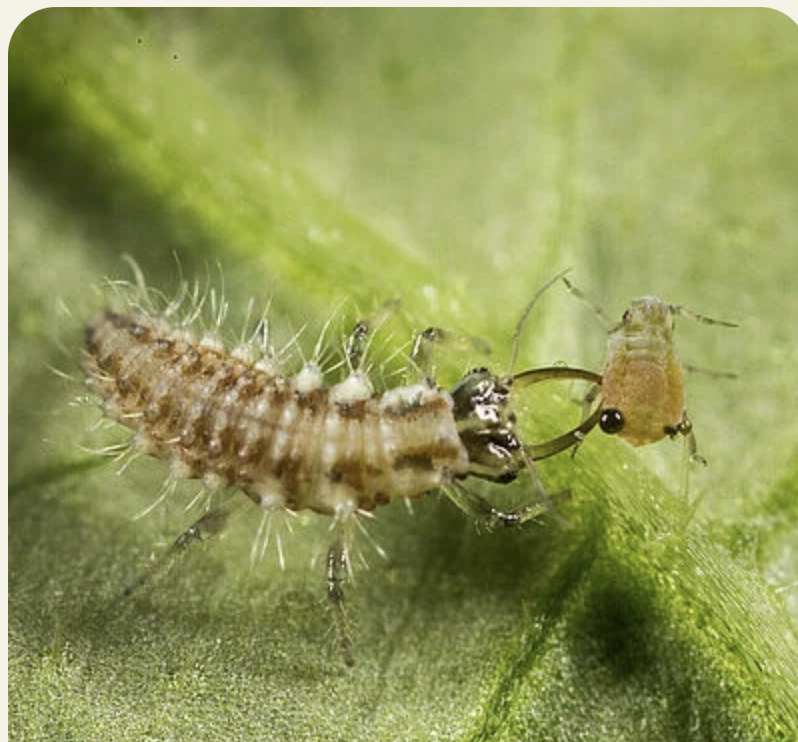
In the 2025 Beneficial Insect webinar that introduced to me to beneficial insects, Lacewings were mentioned as a workhorse in the garden. You may catch sight of one in your garden – I think they are rather graceful and beautiful. The adult female lay 100 to 300 oval eggs suspended singly on fine, hair-like silken stalks to protect them from predators and cannibalism. The larvae that emerge from those eggs are predators of aphids, spider mites, leafhoppers and thrips. The eggs hatch in about 5 days, larvae feed for 2 to 3 weeks using hollow, curved mandibles to pierce soft bodied pests, inject digestive fluids, and suck out body fluids. A single larva can consume over 200 aphids or pest eggs per week. Adults emerge from small silken cocoons 10 to 14 days later.
For the past two years I have been adding lacewing eggs to my garden several times during the growing season resulting in good control of aphids and spider mites. I have also been adding various pollinator plants to my monoculture rose gardens to support beneficials in the garden. My goal is to ultimately create an environment where lacewings naturally exist in the garden, and I can eliminate the need to purchase the lacewing eggs. What needs to be done to attract lacewings to the garden?
- Adult lacewings need nectar and pollen to survive and reproduce. They love flat-topped flower clusters (umbbels) and daisy-like blooms. Examples of these plants include:
- Herbs and umbellifers: Plant dill, fennel, cilantro, caraway, and angelica, and let them bolt (go to flower).
- Nectar-rich blooms: Add sweet alyssum, yarrow, cosmos, coreopsis, and asters to your garden beds.
- Provide shrubs and tall grasses that the adult lacewing can shelter in during the day and provide water opportunities in the garden
- Avoid the use of insecticides as these chemicals kill beneficial predators right along with the pests you are trying to manage.
Lacewings survive winter in our 5b planting zone by hibernating in leaf litter, dead flower stalks, and plant debris. Avoid aggressive cleanup of the garden in the fall so that they have a safe place in which to hibernate.
Walking away from using chemicals and moving towards growing roses in a pollinator and beneficial insect friendly environment has been a big challenge for me. After two years, I can say that I have learned so much, my garden is evolving, and I have a lot yet to learn. And I know I have so many more bugs in my garden – good and bad. I get carried away taking pictures and attempting to identify/learn about these bugs. I even bought a new iPhone so I could take better pictures! During this winter, I plan to organize all these insect photos, and I look forward to developing my 2027 strategy as I take another step forward to growing beautiful roses in a chemical free environment.

