by Diane Sommers, Master Rosarian
No series on rose bugs would be complete without a discussion on Japanese Beetles. Japanese beetles have been a significant problem in our rose gardens for years. I first saw these pests while on an Indiana garden tour during an ARS National Convention. I was so glad they were not in Wisconsin, unfortunately that was not the case for long.
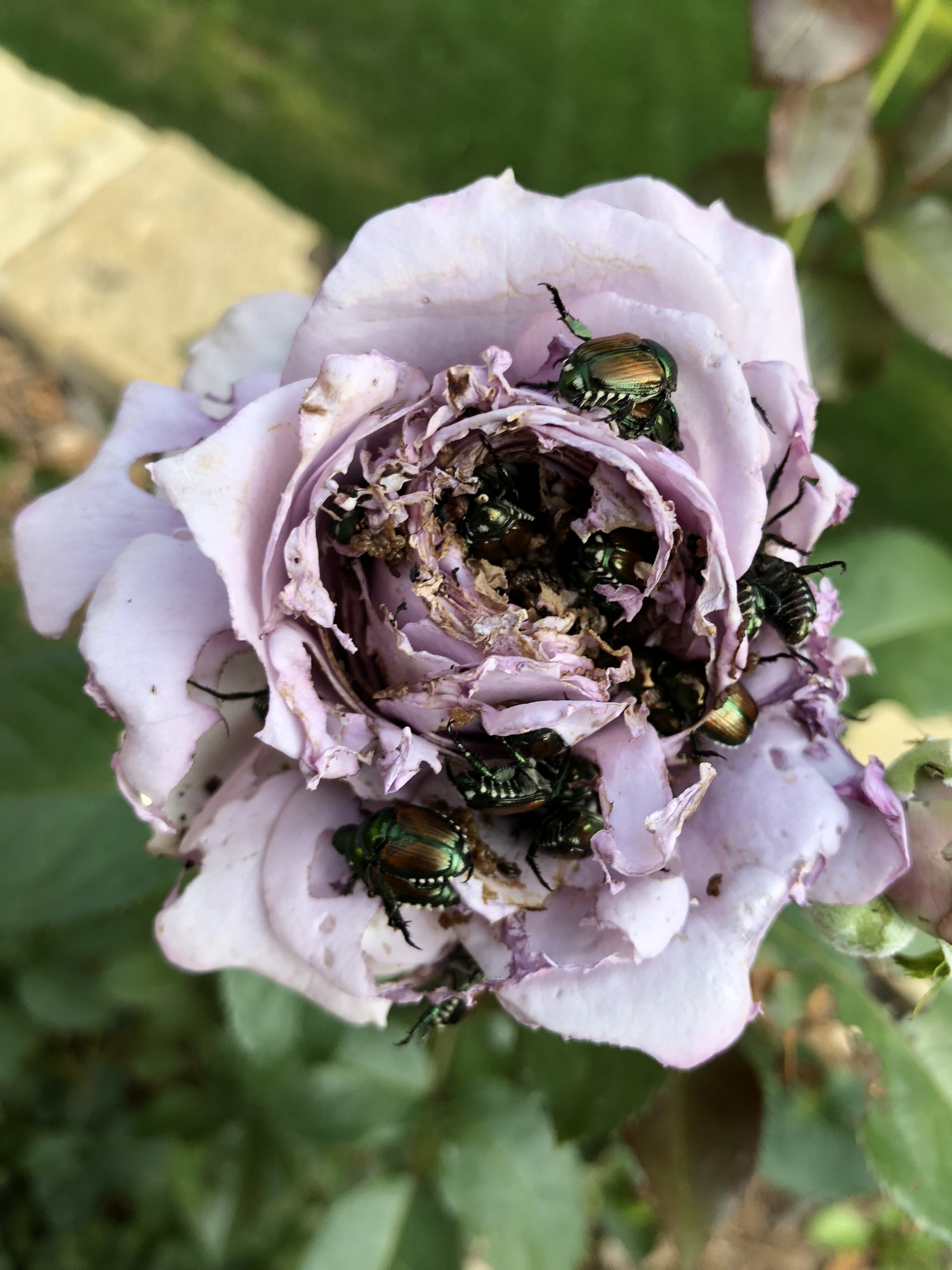
The Japanese beetle (Popillia japonica) was introduced to North America in 1916. It was discovered in a nursery in southern New Jersey and is believed to have arrived in a shipment of imported Japanese iris rhizomes/bulbs prior to the establishment of plant quarantine inspections. Today Japanese beetles are established in at least 28 states, mostly east of the Mississippi River, and have been identified in at least a dozen or more states. According to AI, Japanese beetles(JB) are fully established across Wisconsin, not only as a persistent nuisance but as a major agricultural pest. You may wonder if there are Japanese beetles in Japan and the answer is Yes! On my trip to Japan in spring, 2025, I found only a few Japanese beetles on roses and they were about half the size of beetles in my garden. Japanese beetles are not considered a major threat to horticulture in Japan due to the many natural predators. We will get back to that later.
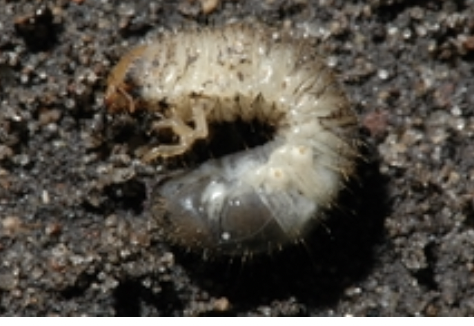
It is important to understand the life cycle of the JB to best consider how to control them in your gardens and yard. Adult beetles emerge from the ground in late June and last throughout the summer. Only the virgin female beetle emits powerful pheromones that attract other beetles, often resulting in large clusters that rapidly skeletonize leaves and flowers. Once mated, the female beetle digs into the soil to deposit her eggs. She prefers mulched gardens and irrigated turf. The female beetle will lay 1 to 5 eggs at a time, returning above ground to feed and mate again. Over her 30 – 45-day lifespan, she will lay between 40 – 60 eggs. Eggs hatch in 10 – 14 days into white, C-shaped grubs that feed aggressively on the roots of garden plants and turfgrass. While we see the damage of the mature beetle on our flowers, it is important to note that there is damage below the ground as well. As soil temperatures drop in late autumn, the grubs move deeper into the soil (typically 6 to 12 inches deep) to hibernate. In spring, as soil temperatures warm, the grubs migrate to the surface to resume feeding before pupation. After feeding in the spring, the fully grown grubs cease eating and hollow out an earthen cell in the soil. It is here that they transform from a grub to the adult beetle that we are familiar with.
The important question everyone asks is how to control/eliminate them in your garden. There are options to control the adult beetles as well as the soil grubs.
Adult Beetle Management
The most common approach to managing the adult beetle is to remove them from your plants and place them in soapy water (I use Dawn dish soap). The soap coats the beetle and blocks their breathing pores making it impossible for them to float or escape. There are insecticides such as pyrethroid-based sprays (bifenthrin, cyfluthrin) that can protect foliage/blooms for about two weeks, though they can harm beneficial insects, pets and people. Some exhibitors have used paint strainer bags to protect the blooms from beetles before rose shows. I have found this to be quite effective, where the evening garden view looks a bit ghostly! Paint strainer bags are reusable and I simply throw them into the washing machine each fall to clean them up and prepare them for next season. Avoid using Pheromone Traps as they often attract more beetles to the immediate area than they catch, resulting in increased damage.
Grub Management
Grub management in late summer and fall can help in preventing next year’s infestation. Late summer treatments are the most effective as that is when the beetles are feeding most heavily. I have also used chemical grub control products in early June when the Grubs are feeding with some success. Use a grub control product effective for JB or introduce beneficial nematodes, Heterorhabditis bacteriophage, as they target Japanese beetles. Milky Spore, a natural bacteria, applications are also effective in killing JB larvae. It is important to note that grub management will take 1 – 3 years but will be a long-term solution.
Japanese beetles have a number of natural predators, some of which you may have seen working in the garden. Insectivorous birds, including robins, starlings, blue birds, sparrows and crows frequently feed on the adult beetles as well as soil grubs. Moles, skunks and raccoons may also feed on the soil grubs. Parasitoid flies lay eggs on the adult beetle and the hatching maggots eat the beetle from the inside out. Parasitic wasps hunt for the larvae in the soil and lay their eggs in them. Generalist predators such as assassin bugs, ground beetles, predatory stink bugs, and spiders actively hunt the beetles and their larvae. Limiting the use of insecticides will encourage these natural predators to help you in the control of beetles and other problematic insects.
Beetles are able to fly up to five miles, another reason not to introduce traps into your yard. I wonder why they would fly so far if feeding material exists closer by.
For years, the rumor was to not squish beetles as a pheromone would be emitted and attract more beetles. That is not true. When JB chew on a leaf, the damaged plant releases volatile organic compounds. These “distress scents” act like a beacon to both male and female beetles, signaling a prime feeding spot. Fragrant roses are most likely to emit these distress scents which is why you may have observed the beetles on select plants in your garden. When you observe beetle damage on a plant, removing the damage can minimize distress scents from attracting more beetles.
The first Japanese beetle siting in my garden is consistently between June 27th and July 4th. Consider options to control the adult beetle and the grubs to break the life cycle of these damaging bugs and enhance the beauty of your garden. Good Luck!

