Between the Leaves – A Closer Look at Garden Bugs
By Diane Sommers
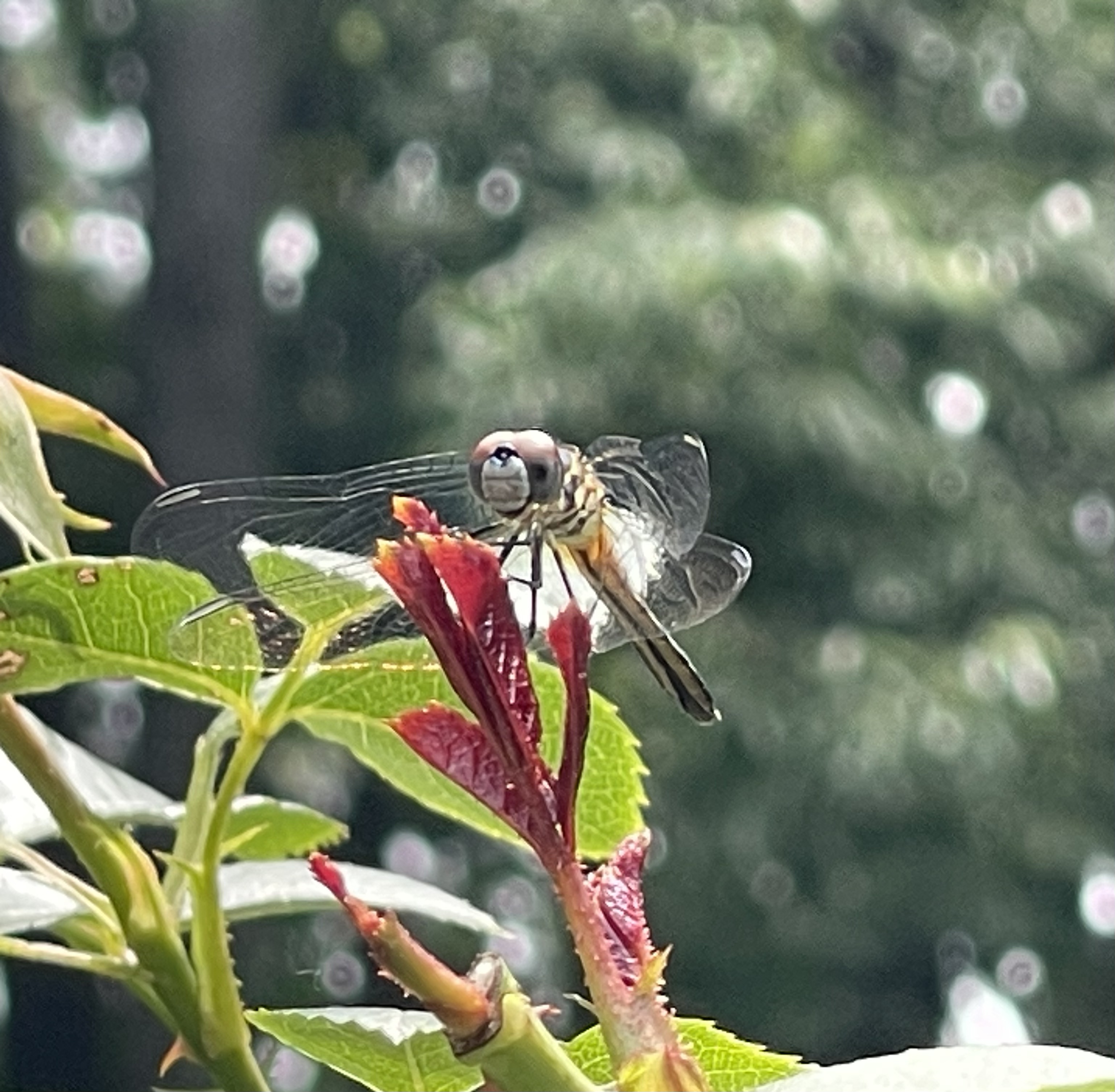
As I began to plan for my series of articles on “bugs”, I had penciled in Green Lacewings for our June newsletter. That changed while walking through the garden recently as I spied my first Dragonfly of the season. With their brilliant colors and diverse wing forms, dragonflies are fun to observe in the garden.
Dragonflies are a group of flying insects that belong to the infraorder Anisoptera, with up to 3,500 varieties worldwide and more than 160 species native to Wisconsin. They have been around for over 300 million years, making them older than dinosaurs! They spend most of their life cycle in the nymph stage under water, feeding on a variety of invertebrates, tadpoles and even small fish. It is impressive that they can live up to two years under water, before they grow wings and emerge as the adults we see in the garden. As adults, they feed on mosquitoes, midge, flies and other insects, eventually mating and laying eggs. Adults live a short time of 2- 6 months, many eaten by birds or succumbing to our cold, winter weather.
Dragonflies are aquatic insects and require fresh water sources for their life cycle. Water features in your yard, or nearby freshwater ponds and wetlands will support dragonflies naturally. The adult dragonfly can fly for miles. They enjoy basking in the sun, our rose gardens are a perfect place, and are attracted to a variety of native plants. The use of pesticides can either damage the dragonfly directly or indirectly by eliminating their food sources. Avoid the mosquito zappers as well, as they eliminate the insects dragonflies feed upon. Did you know that dragonflies can eat 30 to 100 mosquitoes a day?
Adult dragonflies eat up to 15% of their weight daily. They are formidable hunters, with a 95% success rate at catching their prey midair. They are also agile fliers and can use each of their four wings independently. This allows them to fly forwards, backwards and sideways. They can also hover in mid-air. They have huge compound eyes that take up most of the head. Each eye has thousands of lenses giving them incredible, panoramic vision which helps them spot prey up to 10 yards away in any direction.
The next time you see one of these amazing creatures in your garden, pause to appreciate this remarkable insect that supports the environment and your garden.

