By Diane Sommers
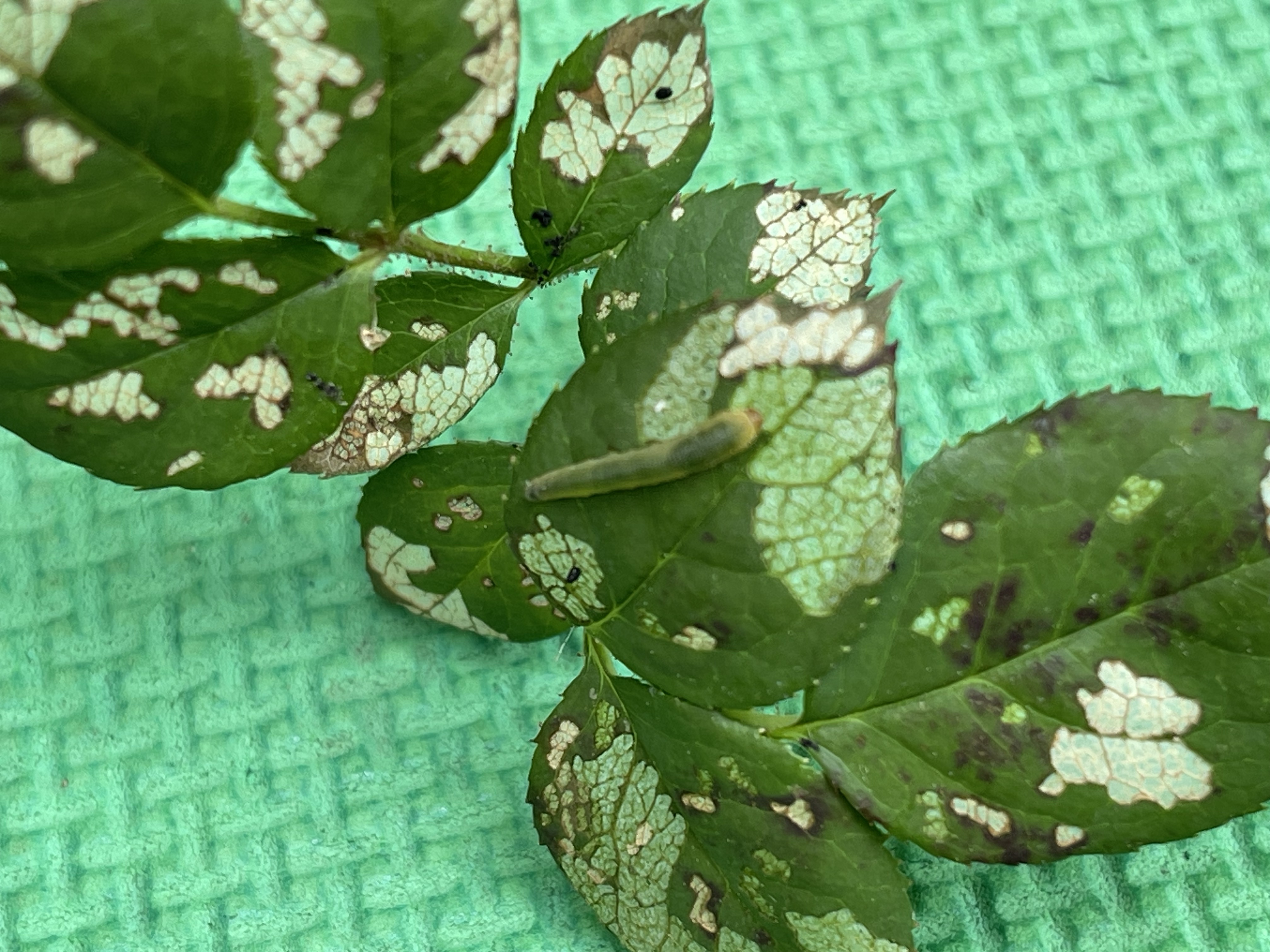
The skeletonizing of rose leaves is often an indication that Sawfly larvae, aka rose slugs, are present in the garden. As damage begins, look at the underside of the leaf for small light green caterpillar-like insects. Sawflies are part of the diverse order of Hymenoptera which includes ants, bees and wasps. Sawflies are nonstinging wasps named for the adult female’s saw-like abdominal appendage used for inserting eggs into the plant tissue. While the sawfly is rarely noticed, it is the larvae feeding on the rose leaves that draws our attention. The common European rose slug has only one generation per year, with activity peaking in May or June. The Bristly rose slug can have up to six generations per year, causing damage throughout the season.
About a week after the female sawfly deposits eggs into the rose leaf, the sawfly larvae emerge and feed. Sawfly larvae are somewhat social and often are found feeding in groups. They look like a small caterpillar generally ½ – ¾ inches long. The larvae feed for about a month and then drop to the ground and burrow into the soil to form cocoons. The adults, small black fly-like wasps, emerge from the soil and the cycle begins again.
Early detection of rose sawflies is important to control. When the leaf damage is first noticed, turn the leaf over and look for the rose slugs. Larvae can be removed by hand and “squished”. I typically use a stone to do that. If the infestation is large, you may need to use insecticidal soap, horticulture oil, or insecticides for treatment. While leaves affected by the larvae may eventually brown and dry, damage caused by the sawfly larvae is generally cosmetic and will not have serious long-term effects on rose plants.
Natural control of rose slugs (sawfly larvae) is highly effective, as they are preyed upon by various beneficial insects (such as green lacewings and parasitic wasps) and birds. Effective organic products that are less harmful to beneficial insects include horticulture oil, insecticidal soap and spinosad. Insecticides used to control caterpillars will not be effective on sawfly larvae because sawfly larvae are not true caterpillars. Be sure to read all product labels before applying.

