Between the Leaves – A Closer Look at Garden Bugs
By Diane Sommers, Master Rosarian
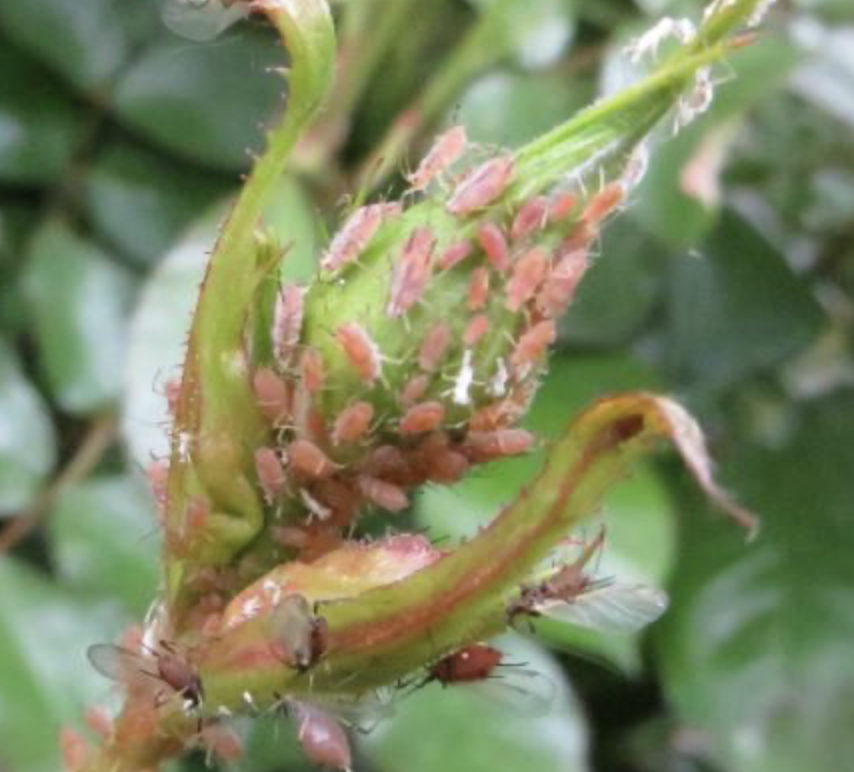
One of the first insects to appear on new rose growth in the spring is the aphid. Aphids on our roses are generally green or red brown in color. These aphids are part of the Aphididae family which consists of over 1,300 species of aphids, many of which feed on just a few species of closely related plants. Aphids reproduce prolifically, which is why your first sighting will likely reveal a whole colony. In addition to seeing the aphids, noticing white skin casts, shiny sticky honey dew or sooty mold on the plant leaves may be a clue that aphids are nearby.
The life cycle of an aphid is quite remarkable. During the growing season, aphid reproduction is asexual. Aphids are female, and produce eggs without mating, retaining the egg internally until it hatches. The nymph emerges as a live birth. The new daughter aphid at birth has already begun to mature her own eggs – they are literally born pregnant! Each female aphid reproduces for 20-30 days, giving birth to 60-100 live nymphs. The newborn nymphs mature and can produce live offspring about a week after birth.
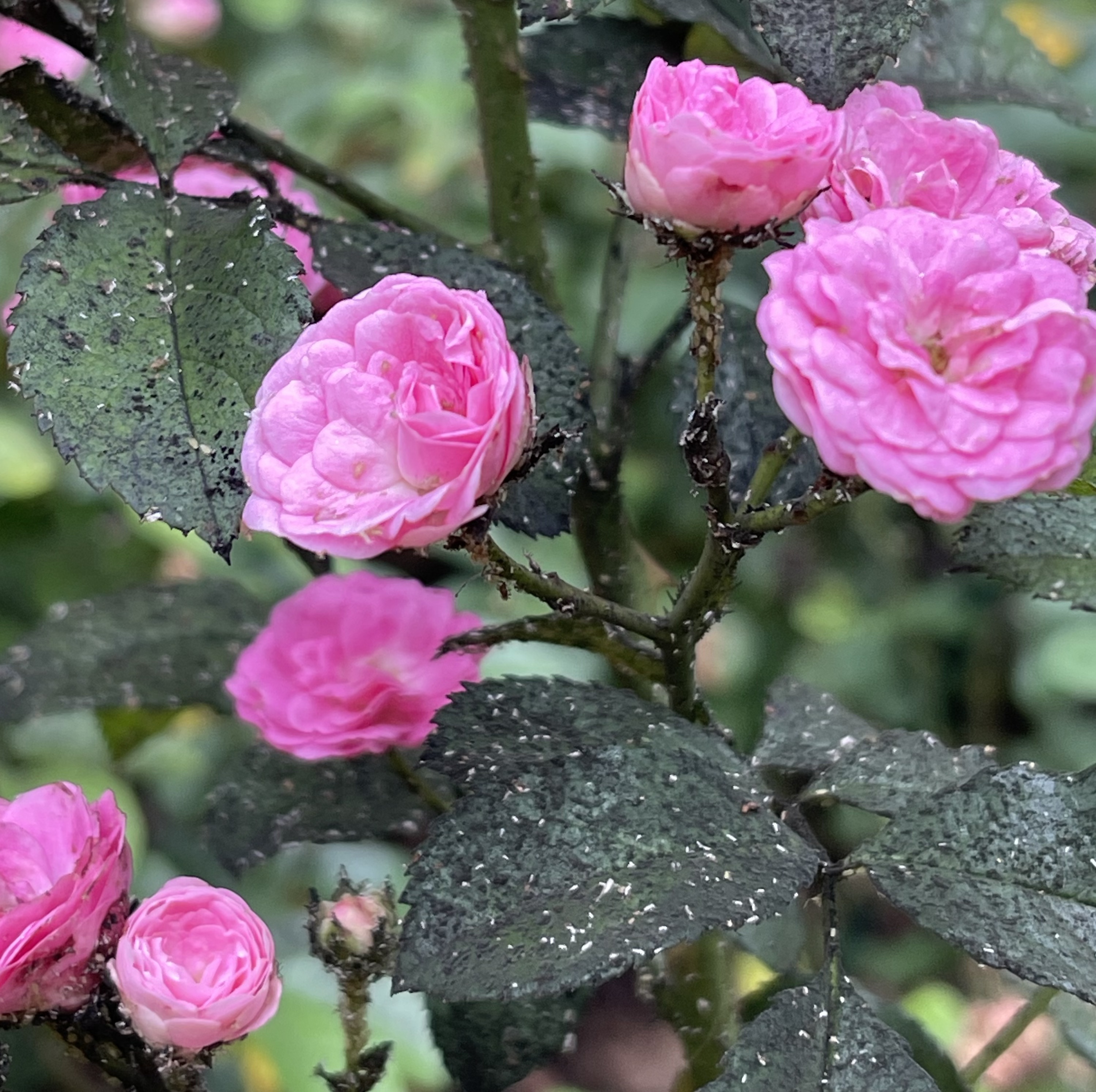
Aphids are soft bodied insects that breathe through tiny pores in their exoskeleton. Their exoskeleton is a hard shell that is shed several times as the nymph grows, creating the white skin casts seen on rose leaves. Most aphids are wingless but winged forms do emerge most often when the host plant becomes overcrowded, food supply becomes limited or in fall when temperatures drop and daylight shortens. Aphids ingest massive amounts of plant phloem sap to obtain nitrogen, sucking sap out of leaves, buds, and stems and producing honeydew as a waste product. Honeydew is a sweet sticky residue that can promote sooty mold growth. I experienced this a few years ago following an aphid infestation that I believe was the result of using insecticides to control Japanese Beetles. Honeydew attracts ants, which protect aphids from predators as they enjoy the honeydew. Honeydew also attracts predators such as predatory wasps, ladybugs, lacewings and hover fly larvae. Severe aphid infestations can distort or kill leaves and flower buds.
Fortunately, the treatment for aphids is quite simple. You can knock them off with your fingers, squish them, or use a forceful spray of water or soapy solution. The soapy solution clogs their breathing holes and smothers them. Horticulture oil can also be used. Unless you have a severe infestation, the use of insecticides is discouraged as insecticides may damage the natural predators found in your garden.
Last year I began my shift to using beneficial insects (natural predators) to control insects and disease in my garden. I released lacewing larvae and placed pollinator plants near my roses. I had no issues with aphids for the entire summer. This spring as I cared for the miniature roses prior to our rose society sale, I experienced a breakout of aphids on them. I also discovered parasitic wasps flying around and even saw the mummy casts that result after the parasitic wasp lays eggs in the aphid. Larvae consume the aphid from the inside and in the process the aphid changes into a hardened shell called a “mummy”. I find it fascinating to watch these bugs at work!
Aphids cannot withstand the cold temperatures that winter brings in Wisconsin. Shortening days and cooler temperatures trigger female aphids to stop producing asexual clones and start giving birth to both winged males and wingless females. These newly formed males mate with the females, who then lay fertilized eggs designed to survive the winter, ensuring the population survives until spring.
Resources for this article:
- “Garden Insects of North America : The Ultimate Guide to Backyard Bugs” by Whitney Cranshaw and David Shetlar, second edition
- UW Madison Horticulture Extension, Susan Mahr

